Hayward and the East Bay
Hayward Washer Repair, Starting at the Drain Pump
Wash stopped with water sitting in it? Your tech opens the pump filter and checks the lock before any part gets ordered.
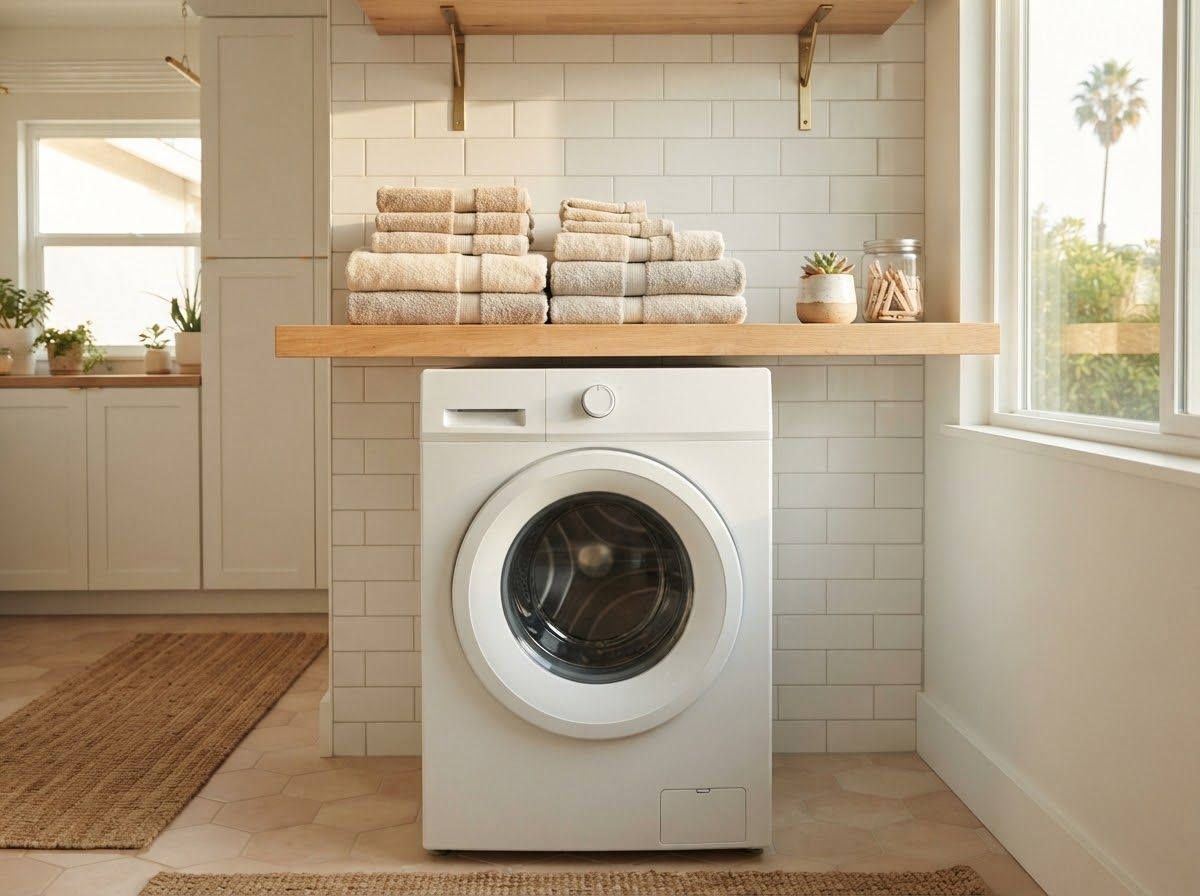
Why won't the washer drain?
Most of the time the water can't get past the pump. A sock, a coin or lint packs the drain pump filter, or the drain hose behind the machine is kinked, and the washer stops with the tub half full. Hayward Appliance Care sets up washer repair visits across Hayward and nearby East Bay cities, for front-loaders, top-loaders and stacked pairs.
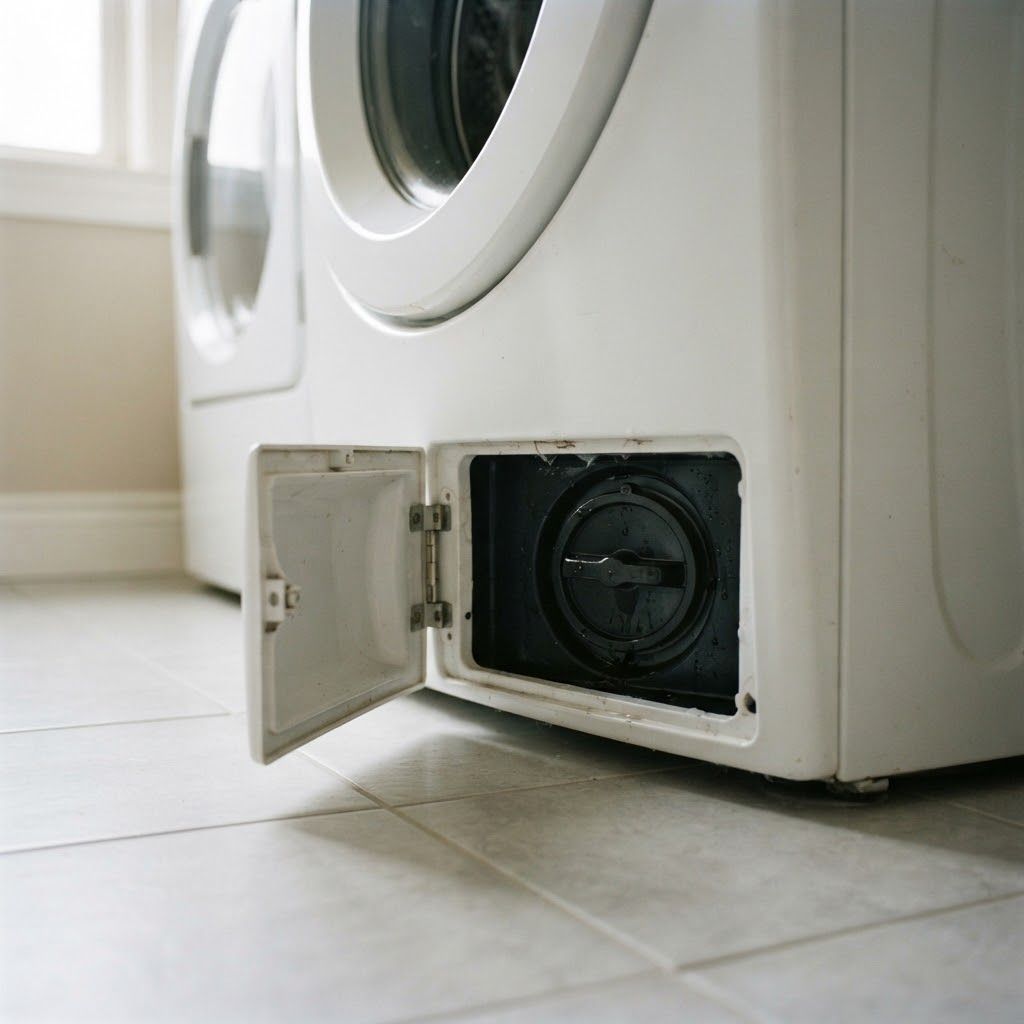
The display usually says so. An LG front-loader shows OE, and LG points first at a kinked drain hose or a clogged pump filter. A Samsung shows 5C, 5E or nd for the same no-drain fault.
Samsung asks owners to clean the front-load pump filter at least once a month or every 40 washes, and few people know it's there. So the filter is the first thing the tech opens. If it's clear, the pump motor gets tested, then the hose and where it meets the standpipe. Samsung wants that hose end 6 to 8 inches into the pipe and not sealed airtight, and GE lists a hose pushed too far in among its leak causes.
Have these on the call
- Brand, and whether it loads from the front or the top.
- The code or blinking light on the panel, exactly as it shows. Leave it on the screen.
- Where the cycle stopped: during the fill, the wash, the drain or the spin.
- Whether it's stacked under a dryer, and whether there's a unit below yours.
Why is the door locked with water inside?
Because the washer is doing its job. Most front-loaders hold the lock while there's water in the drum, so the locked door is a symptom of the drain fault. Pulling hard on the handle can break the latch and add a part to the repair.
Until the visit
- Press cancel or pause once, then stop pressing buttons.
- If the floor around the machine is wet, switch it off at the breaker instead of reaching for the plug.
- Close the hot and cold valves on the wall behind it.
A door that locks with an empty drum is a different fault. LG shows dE or dE1 and Samsung shows dE, dE1 or dE2 when the washer can't confirm the door is shut and locked. A shirt sleeve caught in the gasket can do it, and so can a worn lock assembly or the wiring to it. The emergency steps for a washer cover water spreading across the floor.
What does the code on an LG or Samsung washer mean?
The two brands share letters but not meanings. LE on an LG means the motor couldn't turn the drum; on a Samsung it means water was found where it shouldn't be. Give us the brand along with the code.
| What the washer is telling you | LG front-load | Samsung | Where the tech looks |
|---|---|---|---|
| Won't drain | OE | 5C, 5E, nd | Pump filter, drain hose, pump motor |
| Won't fill in time | IE | 4C, 4E, nF | Supply valves, fill hoses, inlet screens |
| Load off balance | UE | UE, Ub, U6 | The load, the leveling feet, the suspension |
| Door not shut and locked | dE, dE1 | dE, dE1, dE2 | Gasket, latch, lock assembly |
| LE on the display | Motor overloaded or something stuck in the tub | Water level or leak detected | LG: drum and motor. Samsung: hoses, suds, tub |
| Water level sensor | PE | LE, LC, 1E, 1C | Pressure sensor and its hose |
Code meanings come from LG's and Samsung's own support pages. Other brands use different codes; read us whatever is on the panel.
Is the washer leaking from the front or underneath?
Where the puddle forms narrows it down fast. Water at the front of a front-loader usually comes past the door seal, and GE lists soap and soil on the seal, clothes caught in the door and a detergent drawer left open among the causes. Samsung says a single hair on the seal can be enough.
Water underneath or at the back points to the hoses, the pump, or a drain hose pushed too far into the standpipe. Suds count too: too much detergent, or regular detergent in an HE machine, foams up and pushes water out.
The washer leaking guide goes through each spot and cycle stage in detail.
Water under the washer after every load? Close both valves behind it, then call and say where the puddle starts.
Call (XXX) XXX-XXXXUpstairs unit?
Water from an upstairs laundry closet can reach the ceiling below before you see much on your own floor. Tell the neighbor or the building manager the same day so they can check.
Why does the washer shake, walk or refuse to spin?
An uneven load or an unlevel machine causes most of the banging. LG washers try to rebalance a lopsided load up to 3 times, then pause and show UE until someone spreads the clothes out.
Leveling matters as much as the load. Samsung wants all four feet firm on the floor with the locking nuts tight and about an inch of clearance from the walls and the dryer. A washer that rocks on one corner shakes harder every spin, can push water out of the dispenser, and in a tight closet knocks into the wall.
When the drum won't spin at all, the tech checks the lid or door lock first, since the basket won't turn until the lock registers. After that come the drive parts and the motor. A load that comes out dripping is a washer problem even though it shows up at the dryer; the dryer repair page covers loads that are spun out properly and still won't dry.
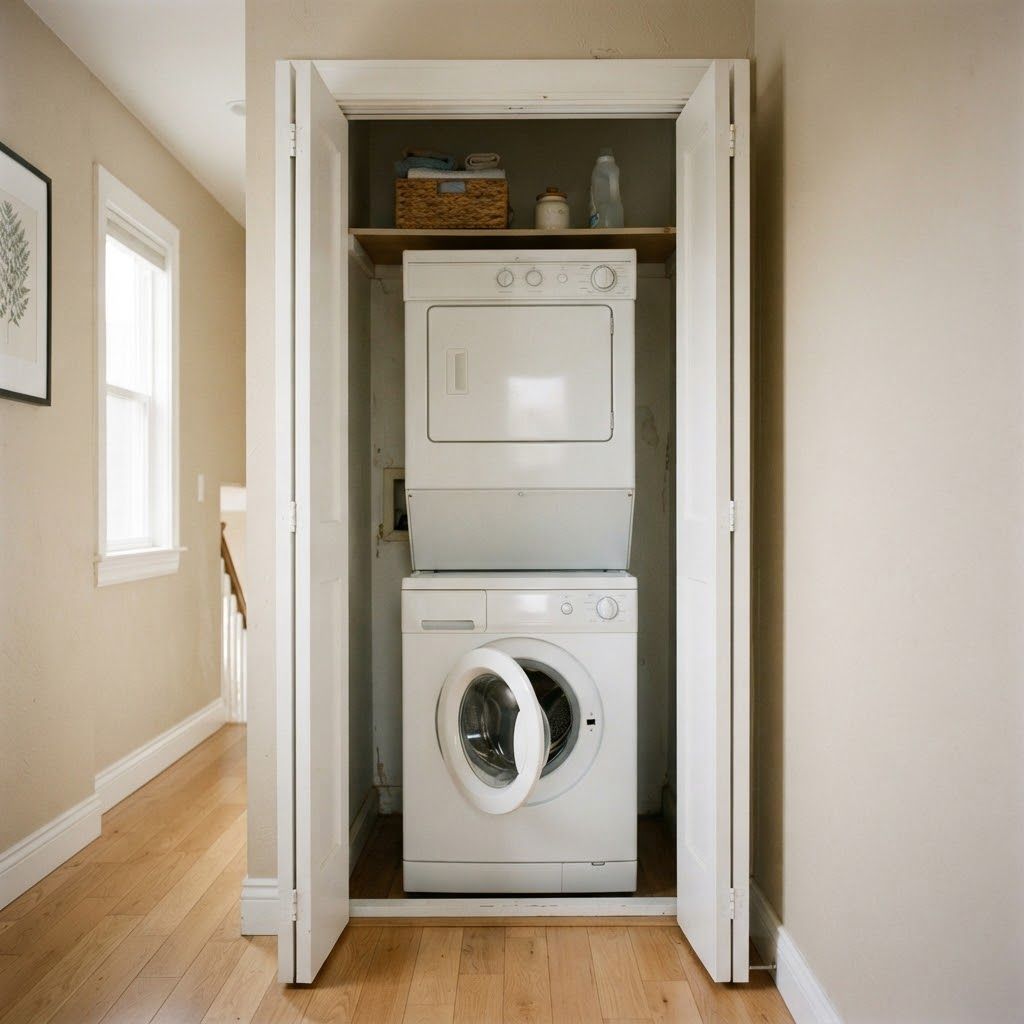
Can a stacked washer in a Hayward closet be fixed where it sits?
Usually, with the right room to work. Plenty of Hayward apartments and condos have a stacked pair in a hall closet, and the closet width decides whether the dryer has to come off the top first. Mention the stack and the closet when you call so the visit is planned for it.
Front-loaders
On most front-loaders the pump filter sits behind a small panel low on the front, so a drain fault can often be reached without pulling the machine out. The rubber door boot, the door lock and the drum bearings are the other usual suspects.
Top-loaders
The lid switch or lock has to register before the basket spins, so it's checked early. Pump and hose work often means getting at the back or underneath, which takes longer under a counter or in a narrow space.
Washers
What else do people ask about washer repair?
Is a washer worth fixing once it passes 10 years?
Often, if the part is a pump, a lock or a hose. A 2007 NAHB study put a washer's typical life at about 10 years, so age alone doesn't decide it. The written price from the visit, set against what a new machine would cost you, does.
How often should washer fill hoses be replaced?
GE and Whirlpool both say every 5 years, and Whirlpool says sooner if a hose bulges, kinks, cracks or seeps at the end. If you don't know when yours went on, say so on the call and the tech looks them over on the visit.
Should I keep running a washer that leaks a little?
No. A small leak during one part of the cycle tends to grow, and the water goes under the machine where you can't see it. Keep both valves behind it closed between loads until the visit.
Do I need to empty the drum before the tech arrives?
No. Leave the water and the clothes where they are, keep the door shut and lay towels along the front. The tech drains it during the visit, and the water left behind helps show whether the pump is moving any of it.
Laundry closet or garage
Washer in a condo closet, a garage or a shared laundry room?
Type the ZIP where the washer is, then call with the brand and whether it loads from the front or the top.
Is the washer's ZIP covered?
The first ten minutes
Want a wash that drains and spins dry on its own again?
In the first ten minutes we'll take down the brand, the letters lit up on the panel and whether a dryer sits on top, then book the visit.