Safety first
Oven Smells Like Gas? Do This First
A strong smell that lingers means everyone outside before any call. A brief whiff as the oven lights is a repair, and the tech can trace it.
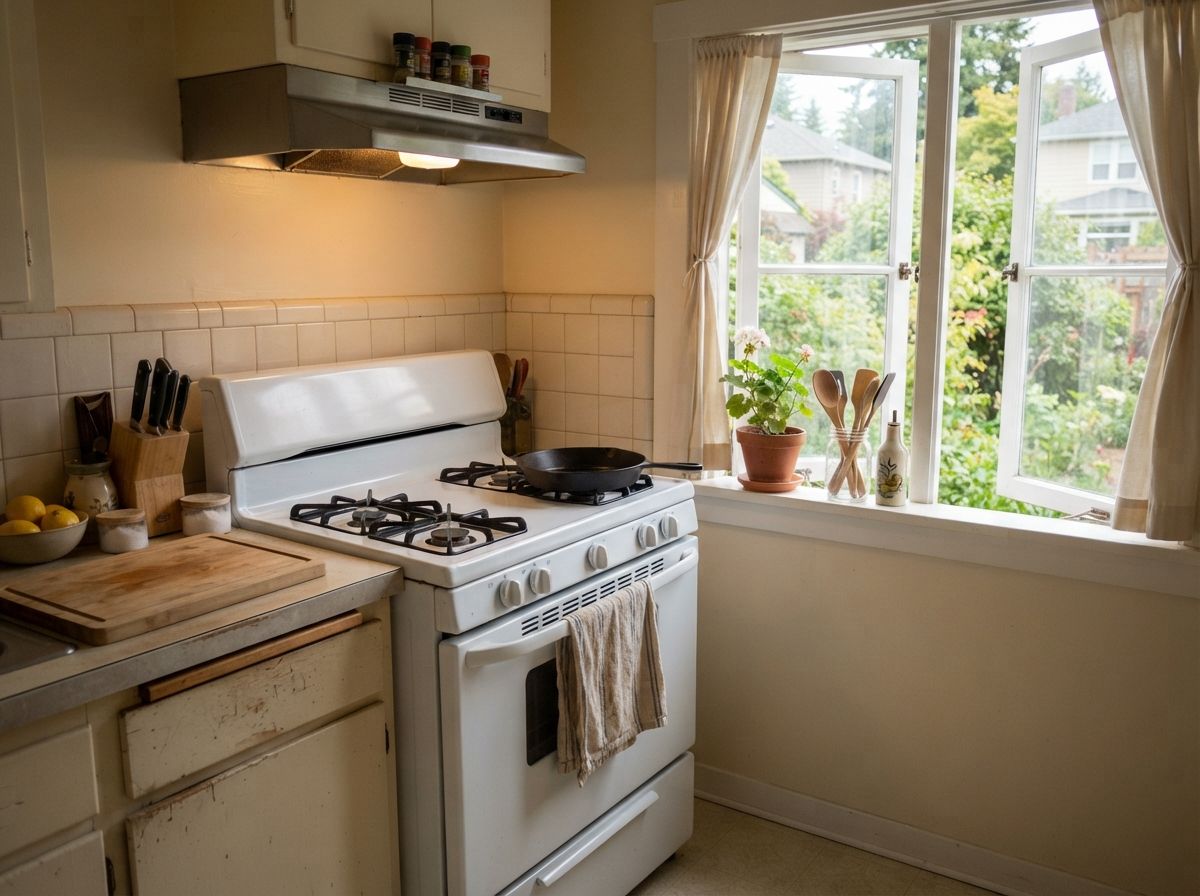
What should you do if the smell is strong or won't go away?
Leave the house now and call from outside. PG&E describes the smell as rotten eggs, and says not to rely on smell alone to judge a leak.
PG&E's steps for a gas leak
- Get everyone out, moving upwind, and warn the people around you.
- Don't use a phone, flashlight, light switch, match or car until you're a safe distance away.
- From a safe distance, call 911, then PG&E at 1-800-743-5000.
Leave the stove knobs alone and don't go looking for the leak. Stay out until PG&E or the fire department tells you the house is safe. They may shut off the gas to the range or tag it so it isn't used. That's the point where the repair starts: call us, tell us what PG&E found, and we'll set up the visit to fix the range.
Is a faint gas smell when the oven lights normal?
A very slight smell for a moment while a burner or the oven lights can happen, and it should be gone within seconds. If it lasts, gets stronger, comes back during cooking, or you smell it with everything off, it isn't the normal kind. Stop using the range and call.
On most gas ovens a glow-bar igniter has to get red-hot before the gas valve opens. GE's manual for one of its gas ranges says the oven burner should light within 30 to 90 seconds of setting the temperature, and LG says its igniters glow for about 30 to 60 seconds first. An igniter that's wearing out takes longer and longer to get there. Smells at the moment of lighting, slow preheats and an oven that sometimes doesn't heat at all often show up together.
One sign needs a call right away: a soft boom when the oven lights, or a door that puffs open. GE describes that as delayed ignition and says it needs service. Don't keep relighting the oven to check.
What makes an oven smell like gas when it preheats?
The smell and when you notice it narrow down where to look. These are the usual sources, and the tech checks them on the visit.
A slow or weak igniter
The oven takes longer to light, and you catch a smell as it does. The tech checks how long the igniter takes to open the valve and whether the burner lights cleanly.
A burner that doesn't burn cleanly
Blocked ports or a misaligned oven burner give a lazy, yellow flame instead of a blue one. GE says a yellow flame is a reason to call for service. It can also leave soot.
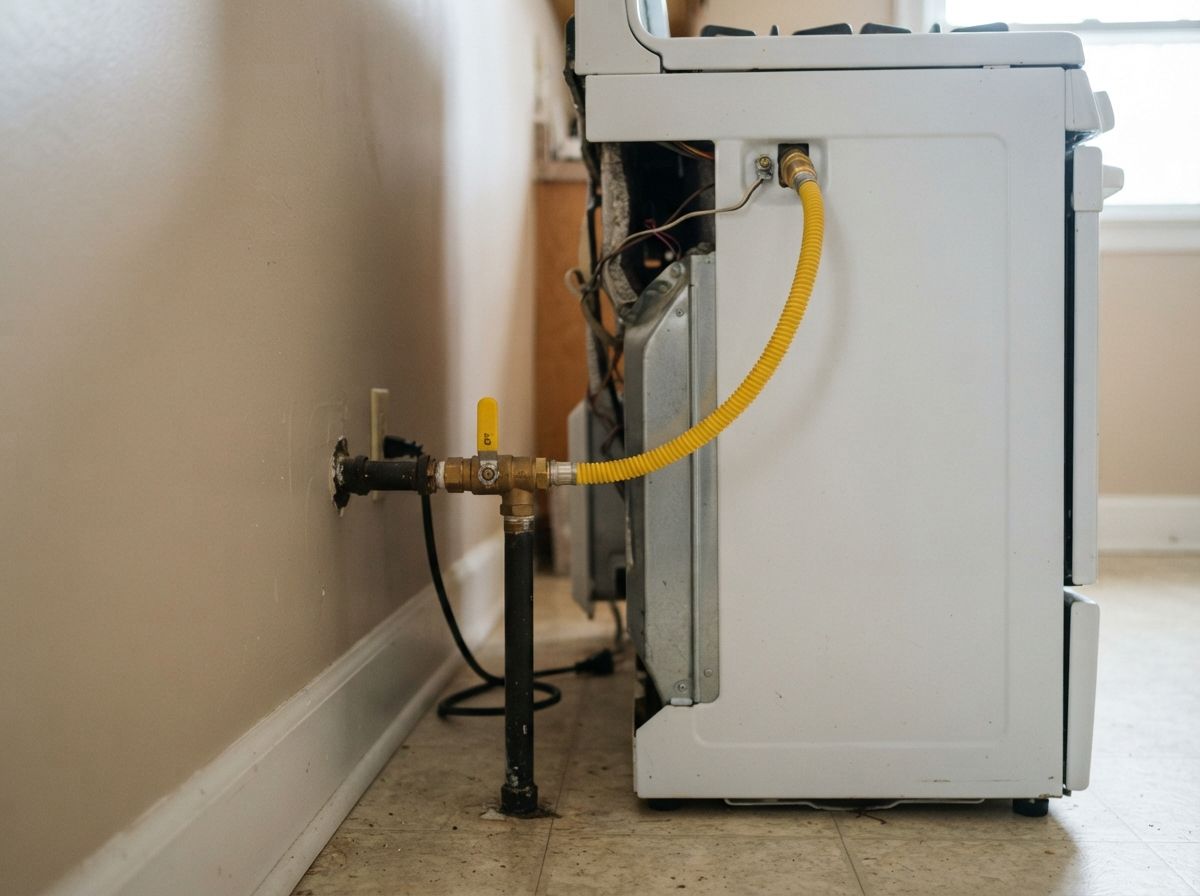
A connection behind the range
The flexible gas connector, the fittings and the pressure regulator sit behind the range. A range that was pulled out for cleaning, moved or bumped hard is the classic case. Smell near the back of the range points here.
The gas valve or thermostat
If the smell comes with an oven that won't hold temperature or a burner that won't shut off cleanly, the valve gets tested. That's parts-level work, never a do-it-yourself job.
Smells only when it lights, and the house has been cleared? Call with the brand and model from the sticker behind the drawer.
Call (XXX) XXX-XXXXCarbon monoxide
Could a gas range be putting out carbon monoxide?
A range that burns poorly can. Carbon monoxide has no smell, so the gas odor tells you nothing about it. The signs are a yellow or floppy flame, soot on pans or around the oven vent, and headaches or nausea that ease when you leave the house.
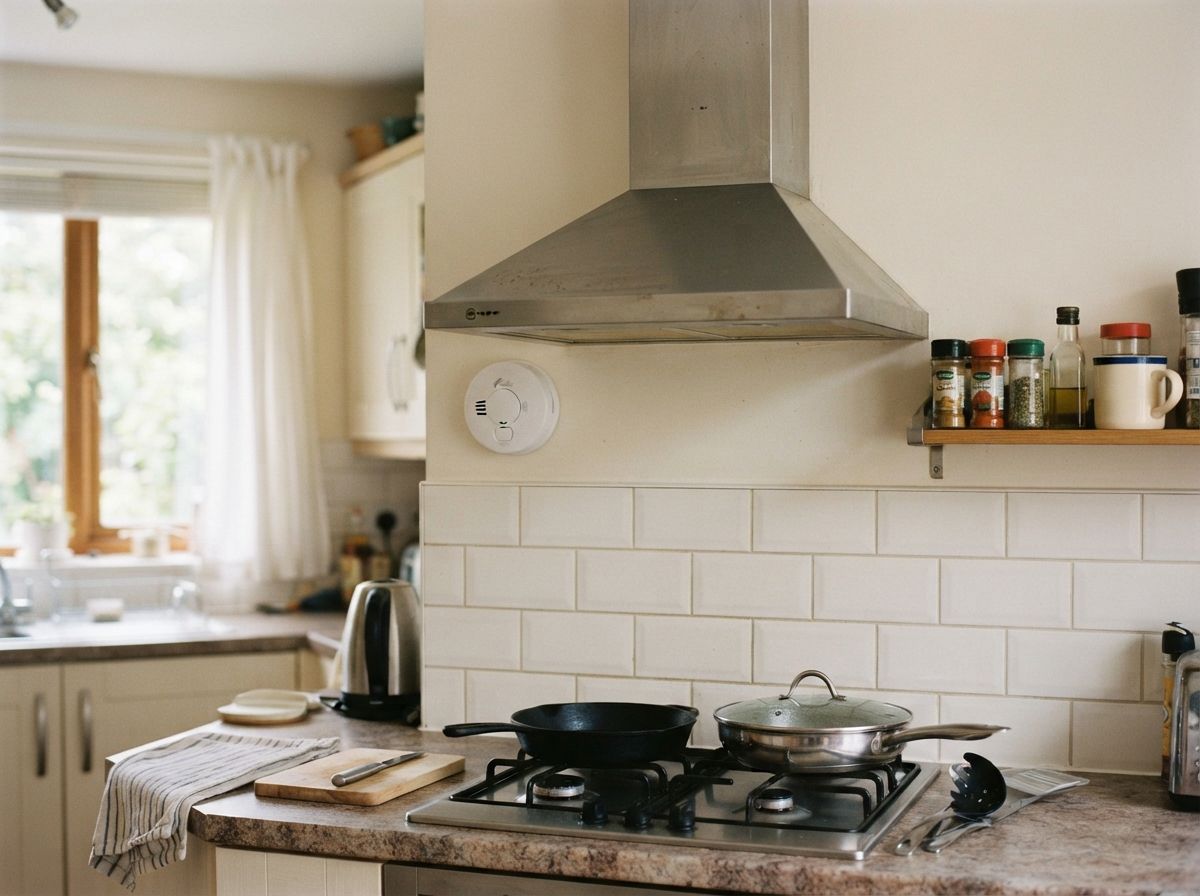
- The CPSC recommends a carbon monoxide alarm on every level of the home and outside each sleeping area.
- If a CO alarm sounds, get everyone outside and call 911.
- PG&E's rule: never use the oven to heat the home.
- A yellow flame or soot is a reason to have the burners checked, even with no smell.
What does the tech check on a gas smell call?
The visit starts by finding where the gas is coming from, not by swapping parts. That means a leak check on the connector, fittings and regulator behind the range, then the oven burner and igniter with the oven running: how long it takes to light, and what the flame looks like once it does.
If PG&E shut off or tagged the range, tell us what the paperwork or the PG&E tech said. It points the visit to the right place before the range is even pulled out.
Have these ready when you call
- When you notice the smell: at lighting, during cooking, or with the range off.
- Whether the oven has been slow to preheat lately.
- Anything PG&E or the fire department told you.
- The brand and model, usually on a sticker behind the storage drawer or on the oven door frame.
For ovens that won't heat with no smell at all, see oven, range and stove repair.
Gas ranges
What else do people ask about a gas smell?
Can I still use the stovetop if only the oven smells?
No. The cooktop and oven share the same gas supply and connector behind the range. Leave the whole range off until the smell has been traced.
My new range smells when I first use it. Is that gas?
Usually not. New ovens burn off oil and coatings the first few times, which smells hot or oily, not like rotten eggs. A rotten-egg smell on a new range is a gas smell and gets the steps at the top of this page.
Does a gas smell mean the range has to be replaced?
Rarely. The usual culprits are a connector, a fitting, a burner that isn't lighting cleanly, or the igniter. The tech finds which one and gives you a written price for that part.
Is it safe to heat the kitchen with the oven door open?
No. PG&E says never to use an oven to heat your home, and a range burning poorly can put carbon monoxide into the room.
After the house is cleared
Ready to get the range fixed?
Type the ZIP where the range is. If it's covered, the call sets up the repair visit.
Check the ZIP for the range
The first ten minutes
Want to cook on that range again without second-guessing it?
In the first few minutes of the call we'll go over what you smelled and what PG&E found, then get the repair visit on the calendar.