Hayward and the East Bay
Dryer Repair in Hayward for Gas and Electric
Clothes still damp after an hour? The tech starts with the vent run and the thermal fuse, two quick checks behind many no-heat dryers.
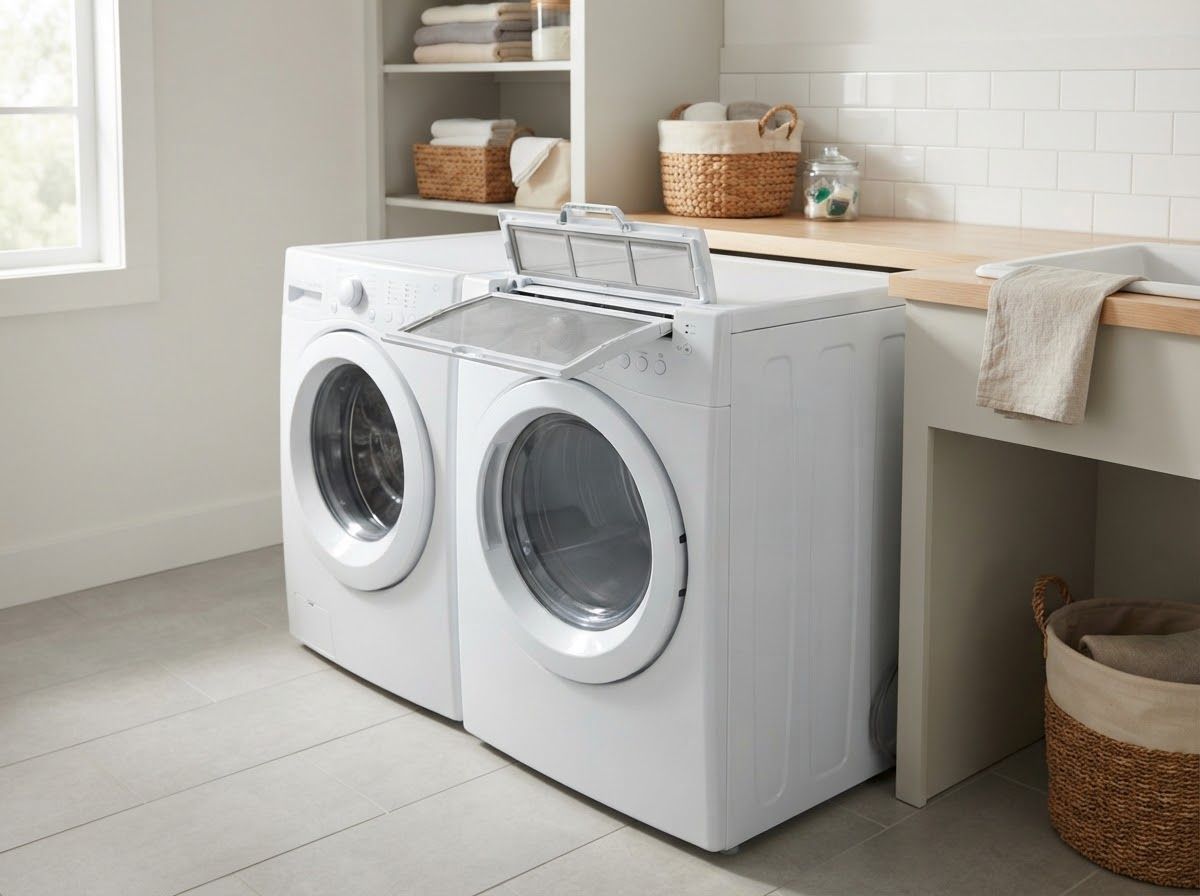
Why is the dryer running but not heating?
A drum that turns with no heat means the motor has power and the heat side doesn't. Hayward Appliance Care sets up dryer repair visits in Hayward, Castro Valley, San Leandro and the rest of the East Bay, and on a no-heat call the tech works through a short list of parts in order, cheapest and most likely first.
On an electric dryer, that list is the 240-volt supply (one half of the double breaker can trip while the motor keeps running on the other), the thermal fuse, the high-limit and cycling thermostats, and the heating element. On a gas dryer, it's the gas valve behind the machine, the igniter, the flame sensor and the gas valve coils.
One quick thing to rule out first: an air-only or air fluff setting tumbles the load with no heat at all, so it can look exactly like a failed dryer.
Many of those parts fail for the same reason: hot air that can't get out. A vent packed with lint makes the dryer run hot, the safety parts trip, and the new fuse goes the same way within weeks if the vent isn't cleared.
Tell us on the call
- Gas or electric. A gas dryer has a pipe and valve behind it; an electric one has a large four-prong or three-prong plug.
- Whether the drum turns, and whether there's any warmth at all.
- How long the vent run is and where it exits: a short run out the back wall, or a long one through the attic or up through the roof.
- Brand and the model number from the sticker inside the door opening.
Which part stopped the heat, gas or electric?
What each symptom tends to point to. The tech tests before replacing anything, because two of these can look the same from outside.
| What you notice | Electric dryer | Gas dryer |
|---|---|---|
| Drum turns, no heat at all | Tripped half of the breaker, thermal fuse, open heating element | Closed gas valve, igniter that doesn't glow, failed valve coils |
| Some heat, but clothes take two cycles | Restricted vent, cycling thermostat | Restricted vent, weak valve coils that drop the flame |
| Heats, then goes cold mid-cycle | High-limit thermostat tripping on heat | Valve coils or flame sensor, often after the dryer warms up |
| Won't start, no hum | Door switch, start switch, thermal fuse on models where it cuts the motor | Door switch, start switch, thermal fuse |
Why do towels take two cycles to dry?
Most often, the air has nowhere to go. Lint builds up in the vent hose, the duct in the wall, or the flap at the outside hood. A thin foil hose crushed behind the dryer when it was pushed back does the same thing.
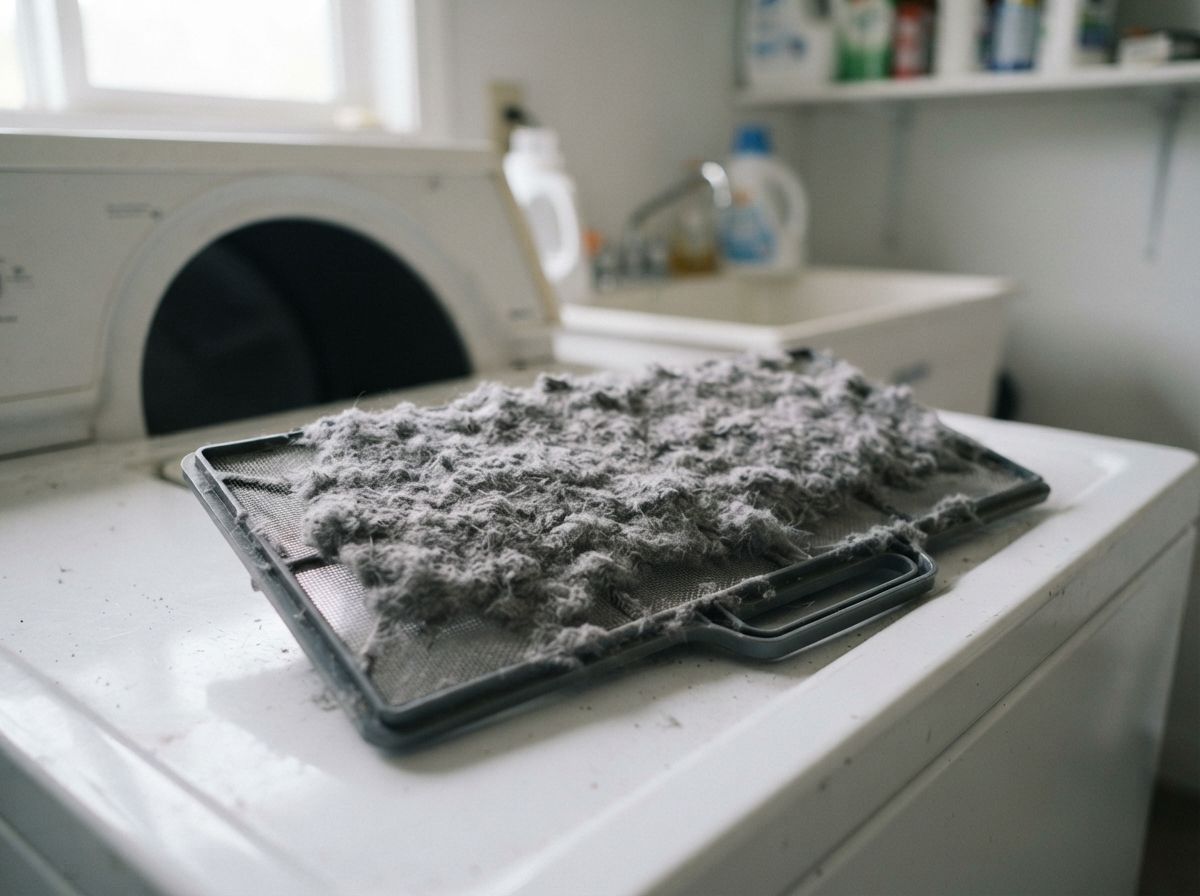
Condos and apartments make it worse. A stacked dryer in a hall closet may vent through a long run inside the building, with several turns before it reaches the outside wall or the roof. Every turn slows the air down and catches lint.
Two other causes are worth ruling out on the visit. A washer that doesn't spin the water out sends a heavy load to the dryer; if clothes come out of the washer dripping, the washer repair page is the place to start. And a moisture sensor coated with dryer-sheet residue can end the cycle early, leaving damp spots.
What the tech looks at on a slow dryer
- Airflow at the outside hood with the dryer running
- The hose behind the dryer for crushing, kinks and foil or plastic material
- The lint path inside the cabinet, below the screen
- Heat output, then the thermostats and the sensor bars
What does a burning smell from the dryer mean?
Stop the cycle and cut the power before anything else. Unplug it if the plug is easy to reach, or switch it off at the breaker. On a gas dryer, close the valve on the gas pipe too. If you see smoke or flame, leave and call 911.
A hot or burning smell usually has one of three sources:
- Lint near the heat. Lint that has worked past the screen and settled near the element or burner scorches. The U.S. Fire Administration names failure to clean as the leading factor in home dryer fires, so this smell is never one to run through.
- A worn belt or a dragging drum. A belt slipping on a seized idler pulley, or drum rollers that no longer turn, rub and smell like hot rubber.
- The motor. A motor that's straining or failing gives off an electrical smell, sometimes with a hum and no spin.
Leave it off until it's been checked. The emergency steps page has the same steps alongside the other urgent appliance problems.
Squealing, thumping, or a drum that won't turn?
Noise is a mechanical problem, and it usually gives itself away. A squeal or chirp points to drum rollers or the idler pulley. A rhythmic thump can be a flat spot on a roller, or something caught between the drum and the front panel. A scraping sound often means worn drum glides or felt seals.
If the motor hums but the drum stays still, the belt has probably snapped or come off the pulley. Don't keep pressing start; a motor that hums against a load overheats.
Is the dryer vent part of the repair?
The vent run gets checked on almost every no-heat and slow-dry visit, because a dryer can't be called fixed while it still can't push air out. If the run is long or goes through the roof, say so on the call.
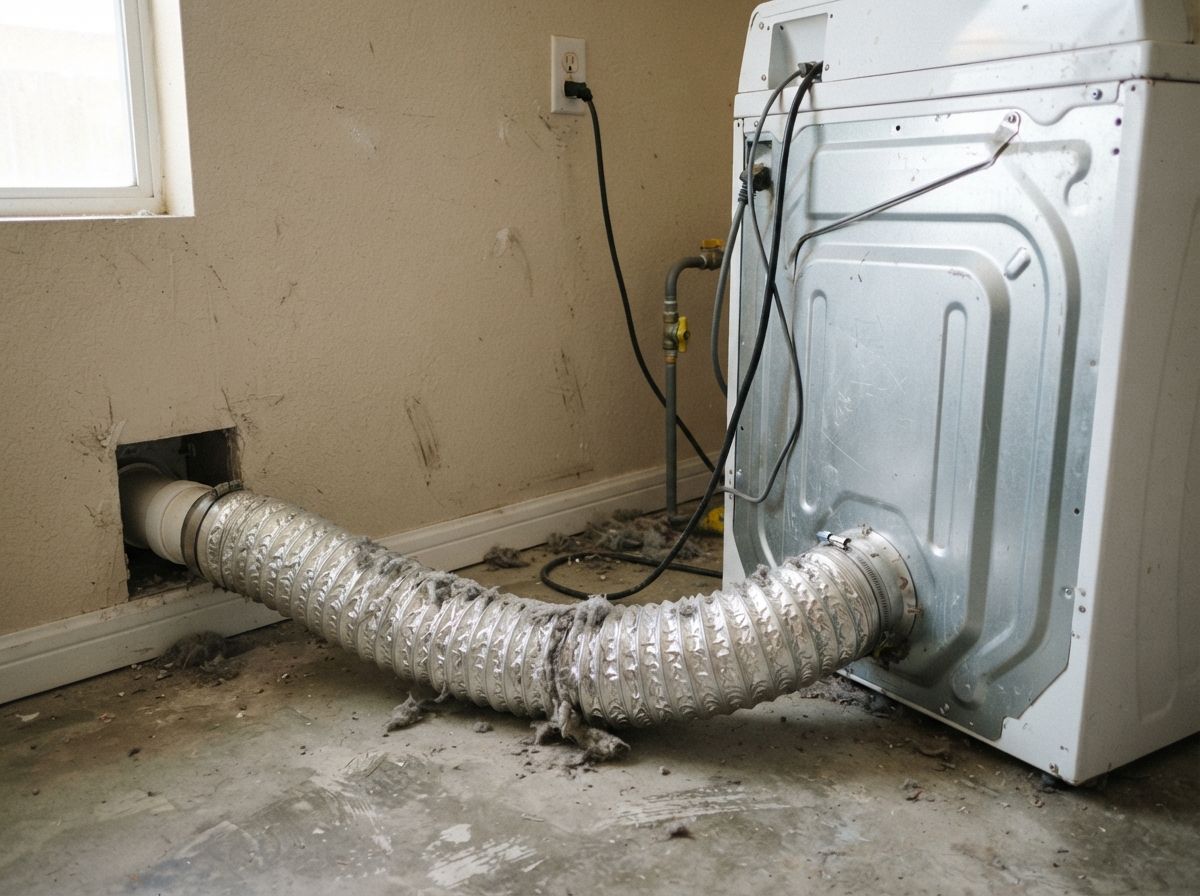
The U.S. Fire Administration advises swapping foil or plastic vent hose for rigid metal duct. Your dryer's manual also sets a maximum vent length, and every elbow in the run shortens it.
Dryers
What else do people ask about dryer repair?
Is it worth fixing a dryer that only stopped heating?
Usually. No-heat repairs tend to be a fuse, a thermostat, an element or an igniter, and the drum, motor and controls are often fine. The written price from the visit tells you for sure.
Why does the thermal fuse keep blowing?
A fuse that blows again after replacement is a symptom. The usual cause is restricted airflow, from a clogged or crushed vent, so a fuse alone won't hold until the vent is cleared.
Can a stacked washer and dryer in a closet be repaired in place?
Often, though it takes more room. Mention the stacked setup and the closet width on the call so the visit is planned for it.
Does a gas dryer need anything different?
The tech checks the gas valve, igniter and flame sensor instead of a heating element, and looks at the flexible gas connector behind the dryer. If you ever smell gas near it, close the valve and leave the room.
Hayward and nearby
Dryer in a garage, closet or laundry room near you?
Check the ZIP for the home, then call with gas or electric and whether the drum still turns.
Dryer inside our service area?
The first ten minutes
Want a full load dry in one cycle again?
Within ten minutes of calling, the visit is set and the tech knows whether it's a gas or electric dryer and how the vent runs.