Hayward and the East Bay
Fridge Ice Maker Not Making Ice in Hayward?
Bin empty while the dispenser still pours water? Your tech works through the filter, the line pressure and the fill tube before the ice maker comes out.
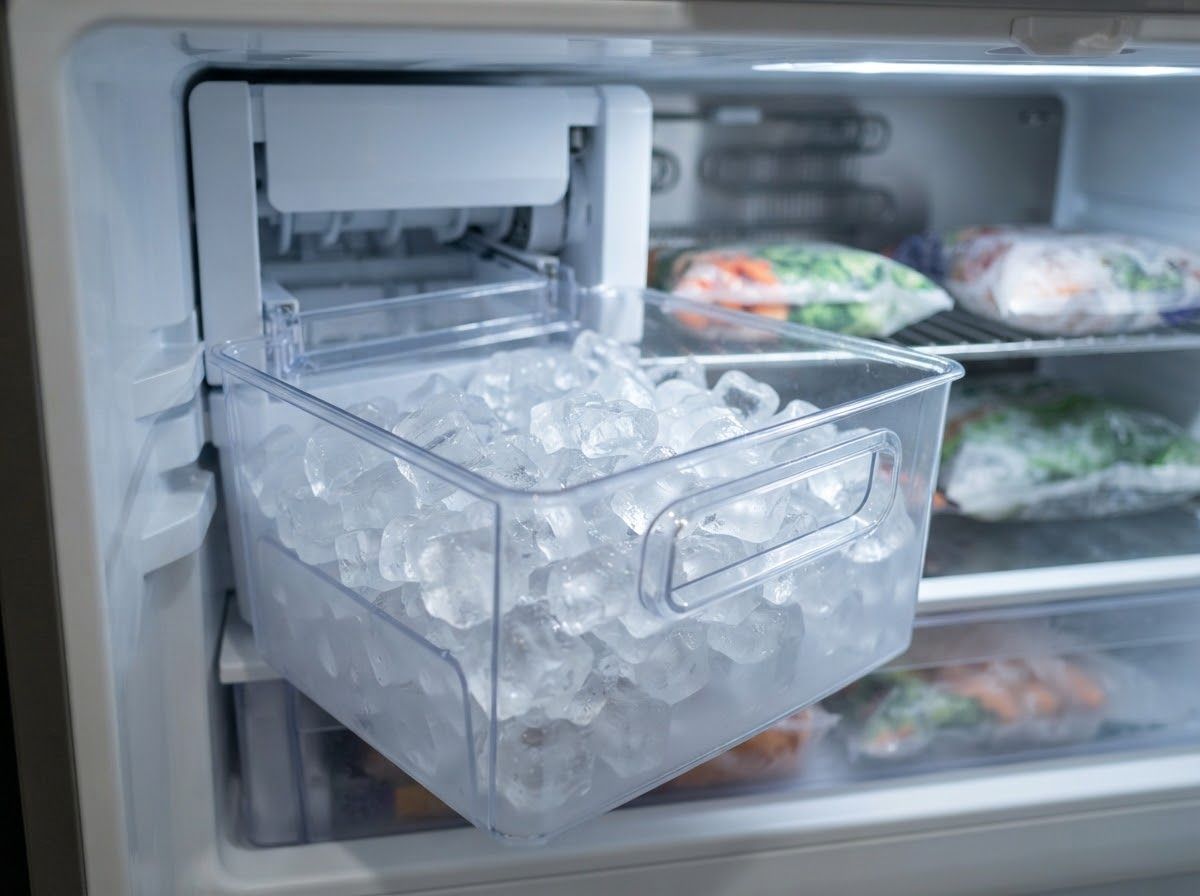
Why has the ice maker stopped making ice?
An ice maker can only fill its mold when water arrives at enough pressure, the freezer is cold enough to set it, and nothing blocks the short path in between. Hayward Appliance Care sets up ice maker repair visits in Hayward and nearby East Bay cities, and the visit runs through those conditions in that order.
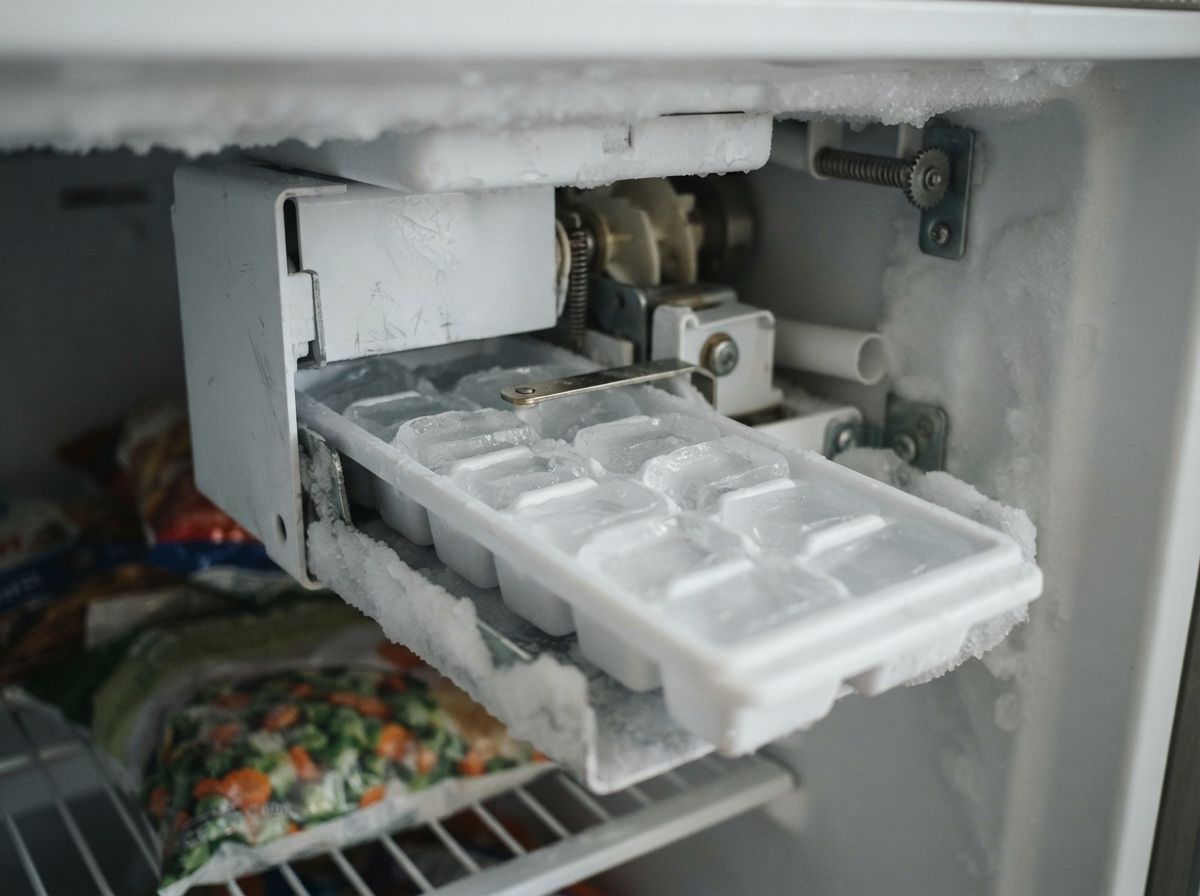
The water dispenser is the quickest clue. If it still pours but the bin stays empty, GE points to a frozen fill tube, or to a filter clogged enough that the dispenser trickles while the ice maker gets nothing. If the dispenser has slowed down too, the trouble sits further back, at the filter, the supply line or the pressure coming into the house.
Freezer temperature comes next. Samsung says its freezers need to be at 0°F or below to make ice, and KitchenAid gives 0 to 5°F. If yours reads warmer, the ice maker is only the symptom, and the refrigerator and freezer repair page covers the cooling side.
Did the power go out lately? Give the fridge time to settle first. The guide to a fridge after a power outage says how long.
Read us these on the call
- Brand and model number, from the sticker inside the fresh-food section.
- Whether the water dispenser pours normally, slowly or not at all.
- Roughly when the water filter was last changed.
- Any code on the display, exactly as it shows.
- The freezer temperature, if you keep a thermometer in there.
How much ice should the fridge be making?
Less than most people expect. GE rates its standard crescent-cube ice maker at about 4 pounds a day, which works out to seven cubes per cycle with a cycle every 70 to 80 minutes.
So a bin emptied for a cooler on Saturday morning won't be full again by lunch, and that's normal. A slow maker and a broken one look different, though. If the bin gains nothing overnight while nobody touches it, something has stopped.
Compare what you're getting with the figures here before you call, and tell us the gap. It points the tech to a weak fill or a stalled cycle.
| Ice maker | Normal output, per the maker |
|---|---|
| GE standard ice maker | About 4 lb a day |
| GE side-by-side | 4 to 4.5 lb a day |
| GE top-freezer | About 3.5 lb a day |
| GE with Quick Ice on | Up to about 6.2 lb a day |
| Samsung, ice maker in the fridge section | A tray every 45 to 65 minutes |
| Samsung, ice maker in the freezer | A tray every 85 minutes |
Small, hollow or odd-shaped cubes: is the water pressure low?
Often, yes. Whirlpool lists hollow, small or irregular cubes, slow dispensing, and slow or no ice as the signs of low pressure at the fridge's water connection.
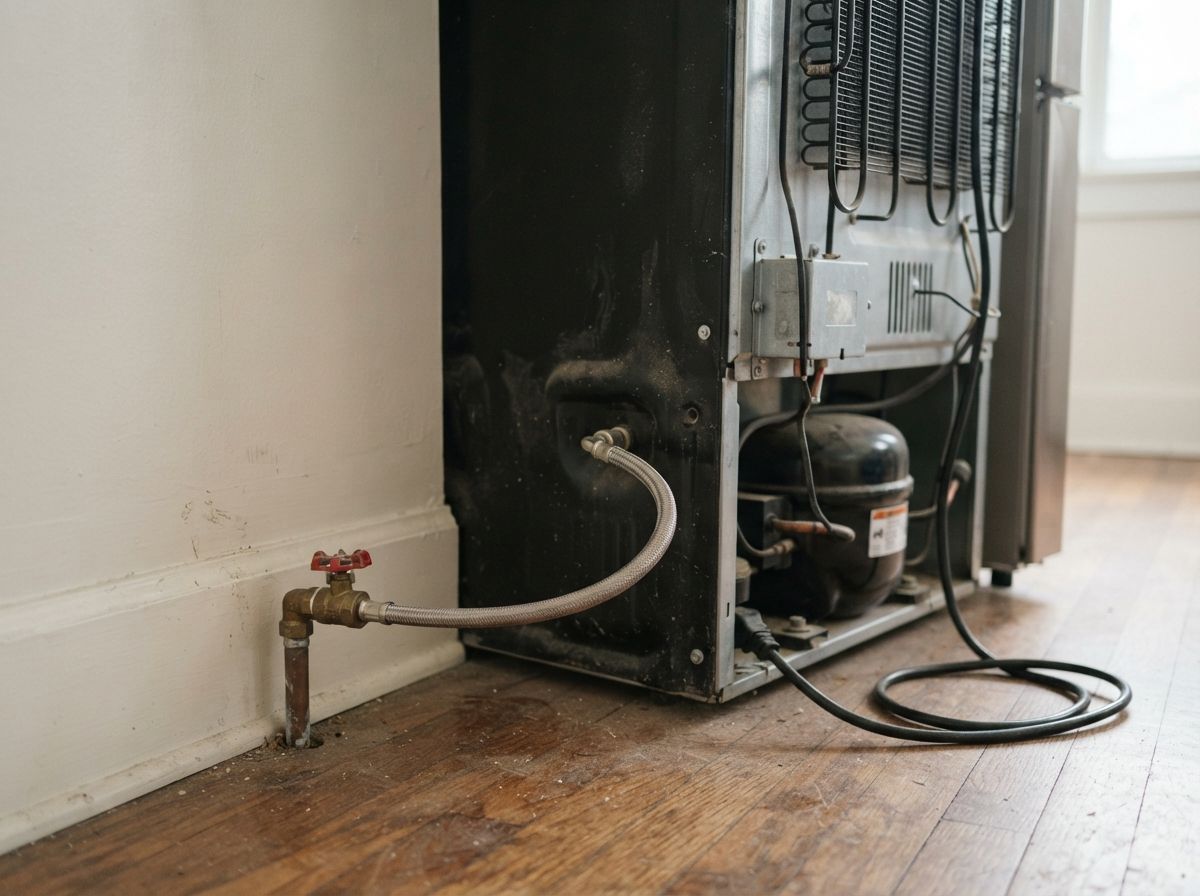
Samsung gives an easy way to put a number on it. On its dispenser models, a 6-ounce glass should fill in under 10 seconds. Time yours and read us the result; a glass that takes twice that long already tells the tech a lot.
A tired filter restricts flow too. GE, Samsung and KitchenAid all call for a new one about every six months, and Samsung rates its filters at 300 gallons. Hayward's city water is soft, around 60 ppm of hardness in the city's 2025 water report, so on a slow fill here the tech starts with the filter date and the pressure at the valve.
Pressure each brand asks for
- Whirlpool: 30 to 120 psi at the connection, with 40 to 80 psi the optimal range.
- Whirlpool on reverse osmosis: 40 to 60 psi at the inlet valve.
- Samsung: 20 psi minimum.
- LG: 20 to 120 psi, or 40 to 120 psi on models with a filter.
New filter in and the cubes still come out small? Time a glass at the door, then call with that number and the fridge's make.
Call (XXX) XXX-XXXXIs the fill tube frozen, and should you thaw it yourself?
Leave the thawing to the tech. Samsung tells owners not to try defrosting the ice maker, and GE says confirming a frozen fill tube means taking the ice maker out of the freezer.
The fill tube is the short pipe that carries water from the inlet valve into the mold. Once it ices shut, nothing reaches the mold, while the dispenser on the same supply keeps pouring. Water at the door with an empty bin is the pattern GE describes.
Book the visit if you see
- The ice maker itself frozen over under a layer of ice.
- The cubes in the bucket fused into one block, with a white wire showing. Samsung lists both as reasons to request service.
- Ice you'd have to chip at to clear. Don't, since the tube and the wiring sit right behind it.
On the visit, the tech removes the ice maker, clears the tube, then checks the inlet valve and the water pressure, so the same freeze doesn't build straight back up.
What do Samsung ice codes like 39E or 40C mean?
These come from Samsung's own error code page, plus one LG code. Read the code to us exactly as it shows. It sends the tech to a part before any cover comes off.
8E or 14E
An ice maker sensor error. 8E is the sensor on an ice maker inside the freezer. The tech tests the sensor and its wiring.
33E
An ice pipe heater error. That heater is there to keep the fill pipe from freezing, so 33E and the frozen tube described above can turn up together.
39E or 39C
An ice maker function error. The ice maker isn't completing its cycle, and the tech checks the assembly and what feeds it.
40E or 40C
An ice room fan error. The fan that keeps the ice compartment cold has stopped, and cubes in a warm ice room melt and clump.
LG: Er IF or F1
A problem with the ice maker fan on an LG, which LG says is sometimes caused by frost building up around it.
Puddle under an ice maker fridge: where is it from?
On a fridge with an ice maker, a puddle sends the tech to the water side first: the supply line and its fitting at the back, the inlet valve, and a fill that overshoots the mold. LG notes that pressure above 120 psi can overfill, and a pressure regulator on the line settles that.
Until the visit, turn the ice maker off and close the valve that feeds the fridge if you can reach it. Wipe up the water so nobody slips on a tile floor.
Why won't the dispenser push any ice out?
Cubes that soften and refreeze stick together, and the auger in the bucket can't turn a solid block. Banging on the chute won't fix the cause.
The tech works out why the cubes are melting in the first place. That means the temperature in the freezer or the ice room, the ice room fan behind Samsung's 40E code, and the seal around the ice compartment door.
Ice makers
What do people ask before an ice maker visit?
Can I keep using the fridge while the ice maker is down?
Usually, yes. A failed ice maker on its own doesn't stop the fridge or the freezer from cooling. If the freezer feels soft or warm as well, mention it on the call, because that changes which parts the tech looks at.
How long after a new fridge goes in should ice show up?
GE says to allow up to 24 hours after plugging in, since its ice maker has to get down to about 15°F before the first cycle. Samsung expects the first ice within 3 hours and normal amounts within 24. A full day with an empty bin is worth a call.
Is it worth fixing the ice maker on an older fridge?
Often it is, because the ice maker is one assembly and the rest of the fridge may be sound. A 2007 NAHB study put a standard refrigerator's life at about 13 years, so on a fridge close to that age, weigh the written price against how well it still cools.
Hayward and close by
Empty ice bin in Hayward or a nearby city?
Type the ZIP where the fridge is, then call with the brand and whether the dispenser still pours water.
Check the ZIP for the fridge
The first ten minutes
Want a bin full of solid cubes again?
In the first ten minutes on the phone we'll take the fridge brand, any code on the display and the filter date, then set the visit.